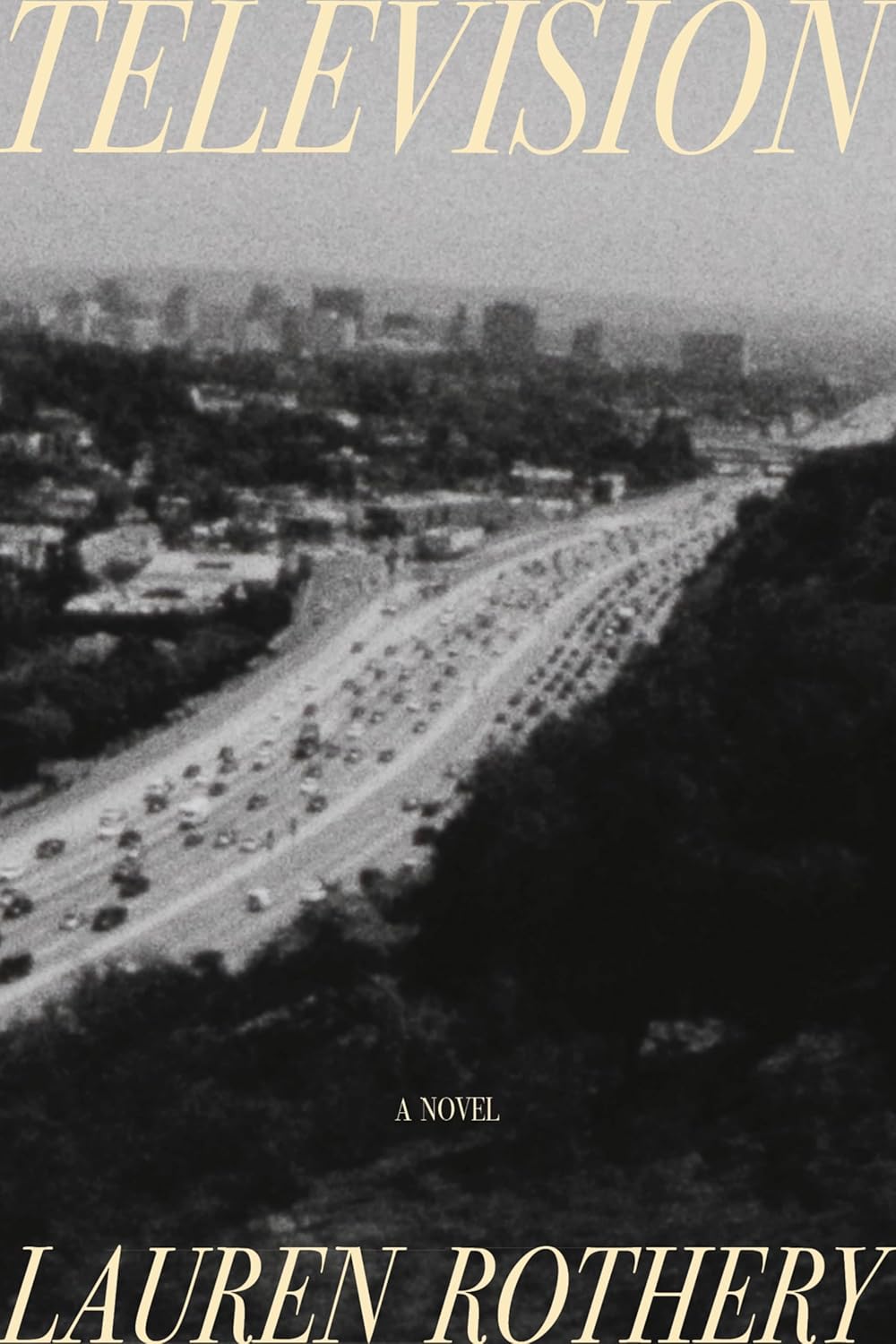
Television: A Novel of Luck
Price: $28.00 - $19.30
(as of Feb 23, 2026 08:47:58 UTC – Details)
Television: A Novel of Luck
Lauren Rothery’s debut novel is a glittering examination of fame, fortune, and the complex interconnections that bind people together in the strange, artificial world of Hollywood. With sharp prose and a distinctly modern sensibility, Television presents an engaging portrait of three characters whose lives intersect in ways both profound and fleeting.
A Cast of Characters in a Changing Industry
The novel centers on an aging A-list movie star who makes the shocking decision to lottery off his entire mega-million dollar blockbuster salary to a random member of the public. This publicity stunt, equal parts generosity and desperation, serves as the catalyst for the story’s unfolding drama.
Surrounding him are two women: a much younger model who becomes his new romantic partner, and an aspiring filmmaker working in relative obscurity. The character dynamics explore generational gaps, the corrosive nature of celebrity culture, and the different forms that ambition can take.
The most intriguing figure might be the protagonist’s non-famous best friend and frequent lover, who observes the chaos with an impassive gaze while reflecting on their two-decade-long connection. This character’s perspective adds depth to the narrative, providing context and history that ground the more sensational events.
Structure and Style
Television employs alternating perspectives that Rothery orchestrates with remarkable skill. Each voice is distinct—the movie star’s jaded world-weariness, the model’s conflicted ambition, the filmmaker’s artistic longing. The shifting viewpoints create a narrative texture that feels cinematic while maintaining literary sophistication.
The author’s use of chronology breaks and time jumps adds to the novel’s modern feel. Past and present intermingle naturally, allowing readers to understand how decades of choices and chance encounters have led to this particular moment. The dialogue throughout is bright and nimble, capturing the rhythms of actual conversation while advancing character development and thematic concerns.
Rothery’s prose style has been described as “literary impressionism,” and while that term might typically signal vagueness or lack of substance, here it manifests as urgent, economical writing that creates vivid snapshots of emotional states and social dynamics.
Thematic Exploration
At its core, the novel examines “phenomenal luck”—both the windfall variety represented by the lottery stunt and the harder-to-define luck of chance encounters that shape our lives. The epigraph about movies versus television—with movies being temporary collaborations and television representing ongoing, enduring connections—serves as a clarifying metaphor for various relationships in the novel.
The book grapples with disparity on multiple levels: wealth inequality, the brutal tyranny of physical attractiveness, uneven distributions of talent and opportunity, gender dynamics in a male-dominated industry, and Hollywood’s obsession with youth. These disparities are woven naturally into the narrative rather than delivered as sermons, allowing readers to draw their own conclusions about systemic problems.
In the age of social media and streaming services, the definition of fame and success has become increasingly fragmented. Rothery captures this disorientation, portraying characters who are aware of their own artificiality—performing versions of themselves even in private moments.
Strengths and Accomplishments
The novel’s greatest strength is its refusal to judge its characters even when they make questionable choices. Rothery approaches each perspective with empathy, understanding the complex motivations that drive people toward self-sabotage or transformation. The philosophical depth of the work, evident in observations about romance, art, and connection, emerges organically from character interactions rather than feeling imposed by authorial design.
For a debut novel, the control of tone is impressive. Television manages to be funny without being cynical, philosophical without being pretentious, and critical without being moralistic. The dialogue particularly stands out, capturing the strange language of Hollywood insiders while remaining accessible and character-appropriate.
Areas for Consideration
The relatively short length of 256 pages means some characters receive less development than readers might prefer. The aspiring filmmaker, in particular, seems poised to carry thematic weight related to artistic integrity and creative struggle, but their narrative arc sometimes feels abbreviated.
Additionally, the novel’s ambitious scope—larger-than-life characters, enormous financial stakes, cultural criticism—occasionally strains against the intimate, personal storytelling Rothery prefers. The glittering surface of Hollywood culture is rendered exquisitely, but readers seeking deeper structural analysis of the industry might find the treatment somewhat superficial.
Cultural Commentary
Comparisons to Joan Didion’s Play It as It Lays are apt, though Rothery’s Hollywood feels distinctly contemporary. The novel captures a culture in crisis, reflecting anxieties about authenticity, connection, and value in an economy increasingly dominated by attention economics and digital personas.
The lottery premise itself functions as a pointed metaphor for the arbitrariness of success. That one person among millions might suddenly find their life transformed through pure chance mirrors how careers in entertainment often hinge on being in the right place at the right time, pleasing the right people, or capturing a zeitgeist. This randomness imbues the novel with a certain existential unease.
Final Impressions
Lauren Rothery’s Television announces a significant new voice in American fiction. The novel succeeds on multiple levels—as entertainment, as social commentary, as character study, and as philosophical meditation on luck and connection. While occasionally the ambitious sweep of the novel’s ideas threatens to overwhelm the more intimate storytelling, Rothery’s prose and empathy for her characters consistently bring the narrative back to human scale.
For readers interested in contemporary Hollywood, ambitious literary debuts, or novels that combine entertainment with thoughtful examination of culture and class, Television delivers a satisfying and thought-provoking experience. It’s a novel that lingers in the mind, prompting reflection on the nature of luck, the strange trajectories of modern life, and the enduring mystery of human connection.
In an era when so much media feels disposable, Rothery’s debut stands out as a work that earns its commentary on the difference between what’s fleeting (movie-like) and what endures (television-like). Like the best television itself, it leaves audiences eager to see what this talented writer does next.


