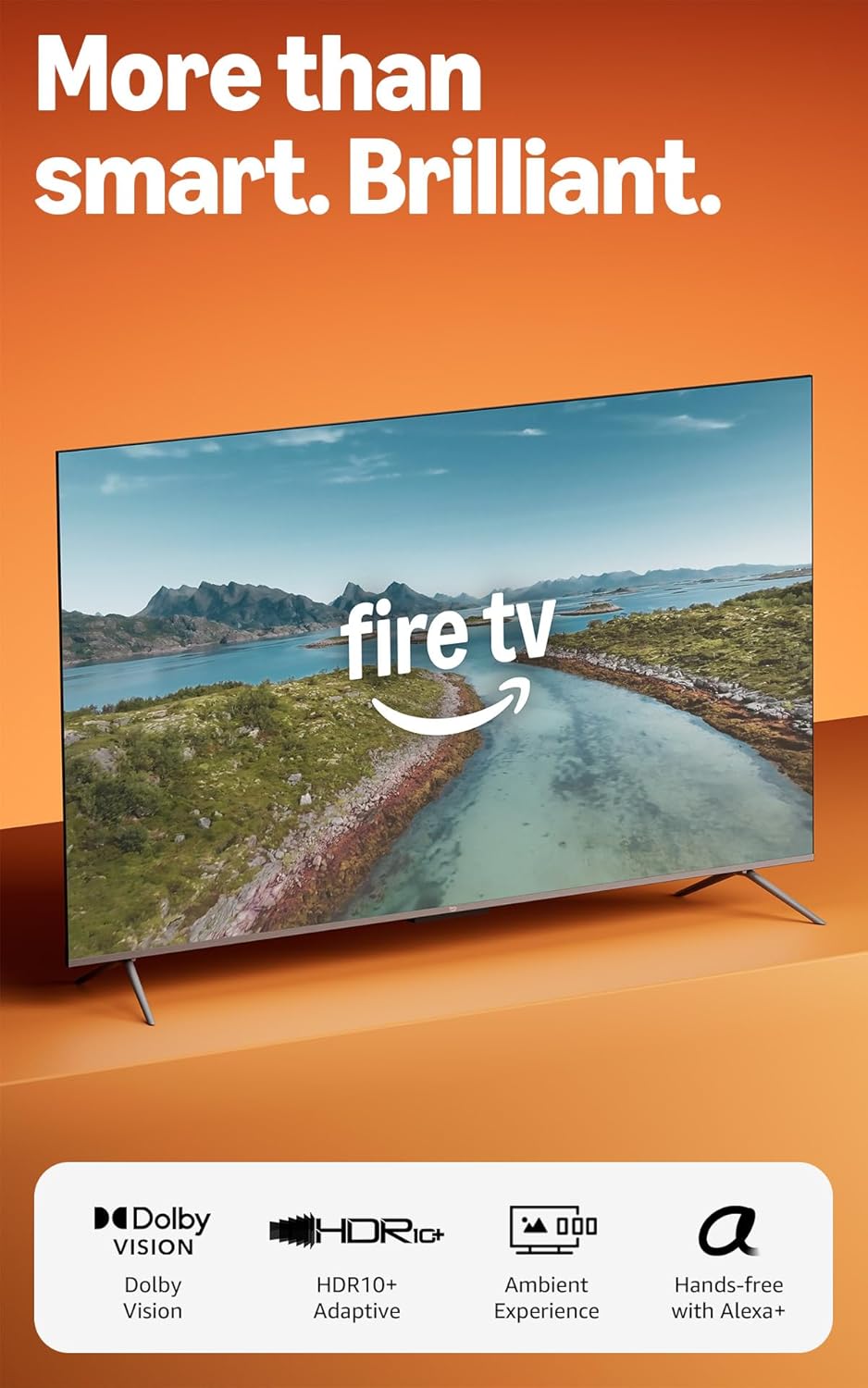
Hisense 50″ Class A7 Series (50A7NF,2025 Model) 4K UHD Smart Fire TV, Voice Remote with Alexa, Wide Color Gamut, HDR10+, Dolby Vision, Dolby Atmos, Game Mode, ALLM, Stream Live TV Without Cable



Price:
(as of Feb 22, 2026 20:36:51 UTC – Details)

Right out of the box, the first thing that stands out is the clean, minimalist design of Hisense’s 50″ A7 Series. The slim bezels provide a near-edge-to-edge appearance, and the slim chassis keeps it unobtrusive even when wall-mounted. The build quality is solid—no flexing or creaking—while the inclusion of VESA mounting compatibility opens up placement flexibility.
Setting it up is straightforward, with step-by-step on-screen guidance through Wi-Fi connectivity, Fire TV account linking, and Alexa activation. The physical setup is light enough for one person to manage, though the stand’s footprint is moderately wide, so a larger table or TV console is recommended.
The panel uses a VA (Vertical Alignment) type, which means deep blacks are one of its strengths. In darker scenes, the contrast is punchy and detail in shadows is preserved reasonably well. Wide Color Gamut coverage via advanced phosphors gives colors an extra layer of vibrancy without tipping into oversaturation, making nature documentaries and animation feel immersive. With support for both Dolby Vision HDR and HDR10+, highlights have good pop, and the dynamic metadata adjusts intelligently to scene-by-scene shifts. That said, the peak brightness is not in the top tier for ultra-bright rooms, so for daytime viewing with heavy ambient light, placement mattered for optimal performance.
Viewing angles are the one place where the VA panel shows its limits—colors darken and contrast weakens noticeably when viewed off-center. If your seating arrangement stretches far to the sides, this may diminish shared viewing experiences.
Sound is handled by built-in dual speakers, enhanced by Dolby Atmos processing. While Atmos is primarily a signal decoder rather than full object-based surround sound, there’s an appreciable sense of height and spaciousness compared to standard TV audio. Dialogue is clear in most modes, and the spatial expansion works well for casual gaming or movies. For critical listening or immersive gaming, supplementing with a soundbar would yield better results.
As a Smart TV, Fire TV is the primary interface. Navigation is snappy and response times are fluid on the remote and menu interactions. Streaming apps are comprehensive—Netflix, Prime Video, Disney+, HBO Max, Hulu, and an array of free ad-supported services like Freevee, Pluto TV, and Tubi are all present. App updates and background processes don’t noticeably impact performance. The Voice Remote with Alexa works instantly—just press the button and speak. Commands range from basic content searches and app launches to smart home device control, and integration with routines adds a layer of convenience.
For gaming, the feature mix is strong for a mid-range model. Game Mode Plus combines 4K 60Hz support, Variable Refresh Rate (VRR), and Auto Low Latency Mode (ALLM). This means once connected to a PS5, Xbox Series X, or compatible PC, the TV recognized game signals, switched modes automatically, and kept input lag to a competitive minimum. The motion handling is precise—fast-paced games remain sharp without distracting smear. The inclusion of an eARC-compatible HDMI is a sign that Hisense is thinking ahead for multi-device setups where high-bitrate audio over HDMI can pass through to an external receiver.
Hisense’s 4K AI Upscaler does a respectable job converting HD and lower-resolution content to near 4K clarity. Faces are sharper, textures are more defined, and the algorithmic processing leaves less of the softening or ghosting artifacts that can plague lesser upscalers. That said, the sharpening can be adjusted in the menus to suit personal taste, as some might find the default mode a touch aggressive on older film grain sources.
Connectivity is generous—three HDMI 2.0b ports handle multiple consoles, a PC, or set-top box, with one eARC-capable port for advanced audio routing. Wi-Fi 5 keeps streaming reliable even at higher bitrates, and the combination of webOS-Smart Cast Hybrid OS with built-in Fire TV means both native and cloud app interfaces run in parallel without major lag.
There are minor trade-offs: no support for the latest HDMI 2.1 features like 4K/120Hz gaming or FreeSync, the local dimming is edge-lit rather than full-array (resulting in slightly less control over deep-contrast scenes), and OLED-like perfection in blacks and viewing angles is absent. For those accustomed to premium quantum dot or OLED panels, these are noticeable distinctions.
In daily use, the TV shines brightest for content that can leverage its wide palette and dynamic range—animated movies with vivid colors, high-bitrate HDR action films, and narrative-heavy games where the contrast retention and motion precision truly come through. The value proposition is high for those upgrading from a 1080p display or earlier non-HDR smart TVs.
For households prioritizing smart integration, gaming refresh features, broad streaming app access, and vibrant visuals without stretching into 2024 flagship pricing, this TV is a compelling middle-ground pick that hits most of the right notes while keeping a foot in future tech compatibility.