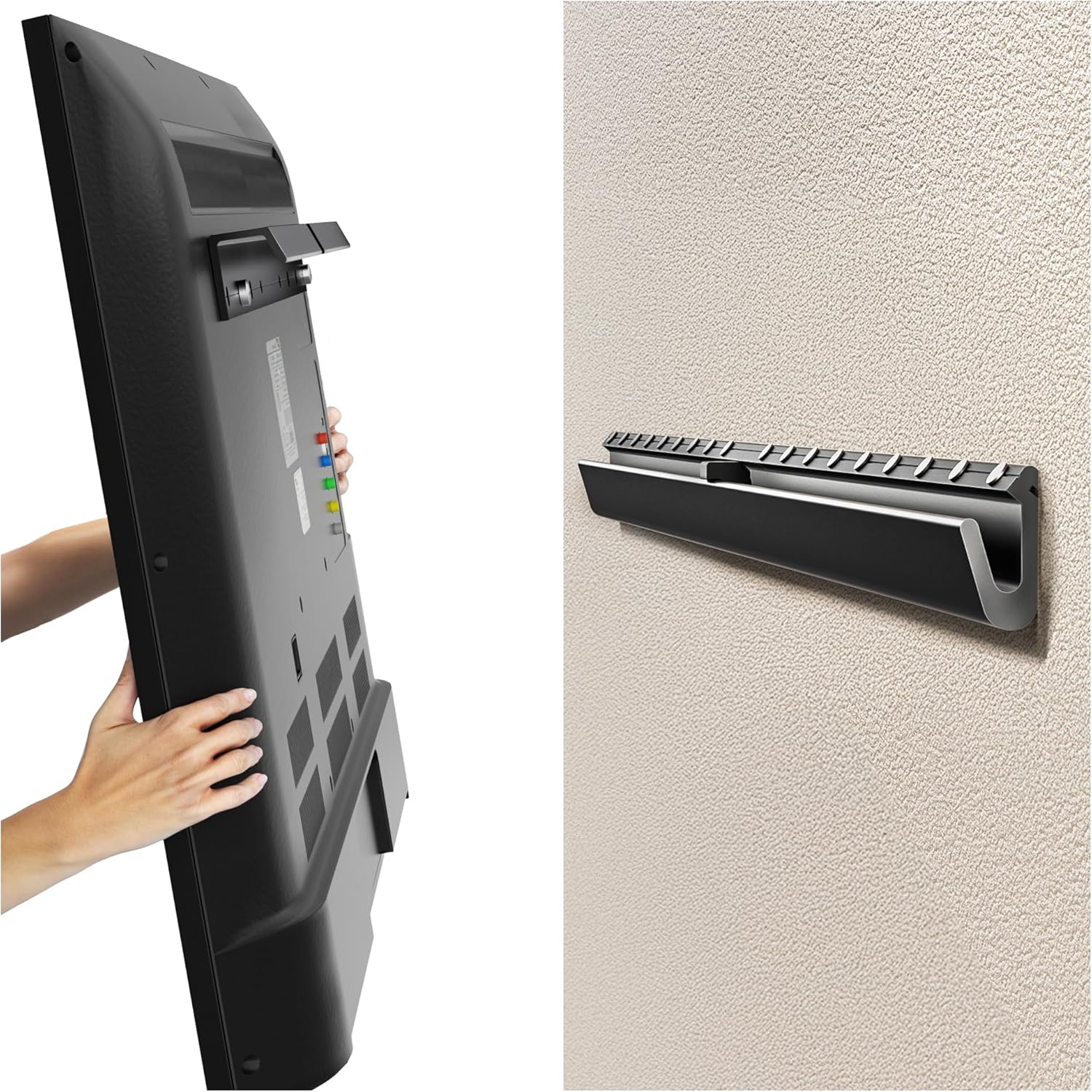
Auoace No Drill Drywall TV Mount, 22 to 55 inch Small TV Mount up to 100 LBS, 1.1″ Low Profile, Easy Install with All Hardware, Studless TVs Bracket for Most 32″ 40″ 43″ 50″ 52″ 55″ Screen



Price: $18.87
(as of Feb 24, 2026 04:23:30 UTC – Details)

At first glance, the appeal of a studless TV mount lies in its convenience. For many, the idea of avoiding stud-finding tools, heavy-duty drills, or messy drywall anchors is a big draw—whether due to rental restrictions, living in a dorm, or simply wanting a quick installation. This particular model targets exactly that niche: drywall and plaster walls, with claims of no drilling or expansion bolts needed. That immediately suggests it’s relying on a different kind of mounting mechanism, likely small nails, adhesive components, or a tension-based design.
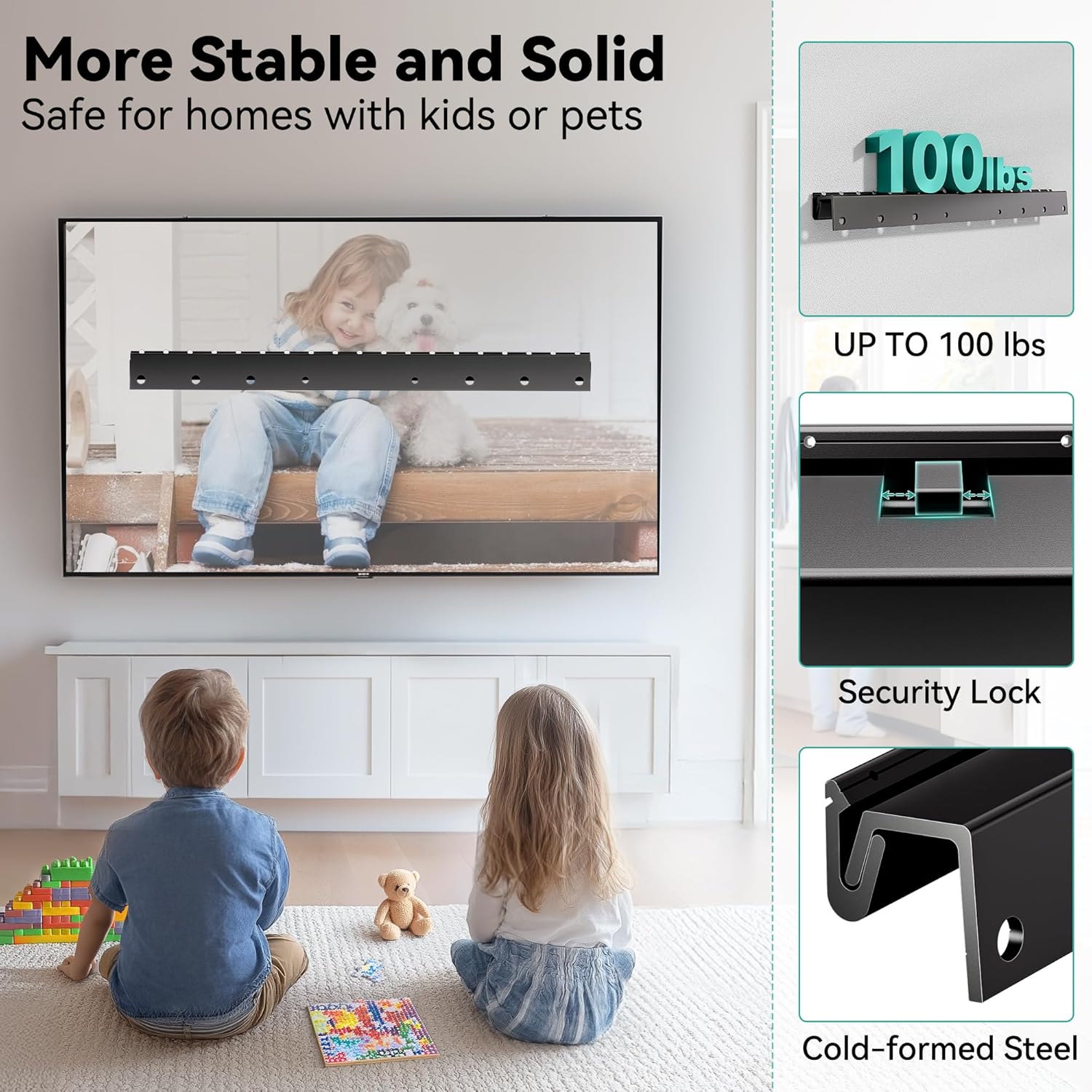
The claimed compatibility is fairly broad—22 to 55 inches, made to fit VESA patterns from 100x100mm up to 400x400mm, meaning it covers a wide range of modern TVs, not just smaller screens. The 100-pound weight capacity seems more than sufficient for flat-panel TVs in this size range, which rarely exceed half that weight.
A 1.1-inch low profile is quite slim, which keeps the mounted TV parallel to the wall, giving a minimalist appearance. That’s a plus for small rooms or sleek interiors. The emphasis on a single-pole, fixed design further suggests simplicity is its main selling point. Fixed mounts are more stable than tilting or articulating ones, but they sacrifice adjustability once installed.
Material-wise, cold-rolled steel is a good sign—it’s strong and durable for structural support. The “anti-slip” feature in the middle of the bracket suggests extra stability, which could be beneficial for homes where accidental bumps or vibrations are a concern, such as with kids or pets.
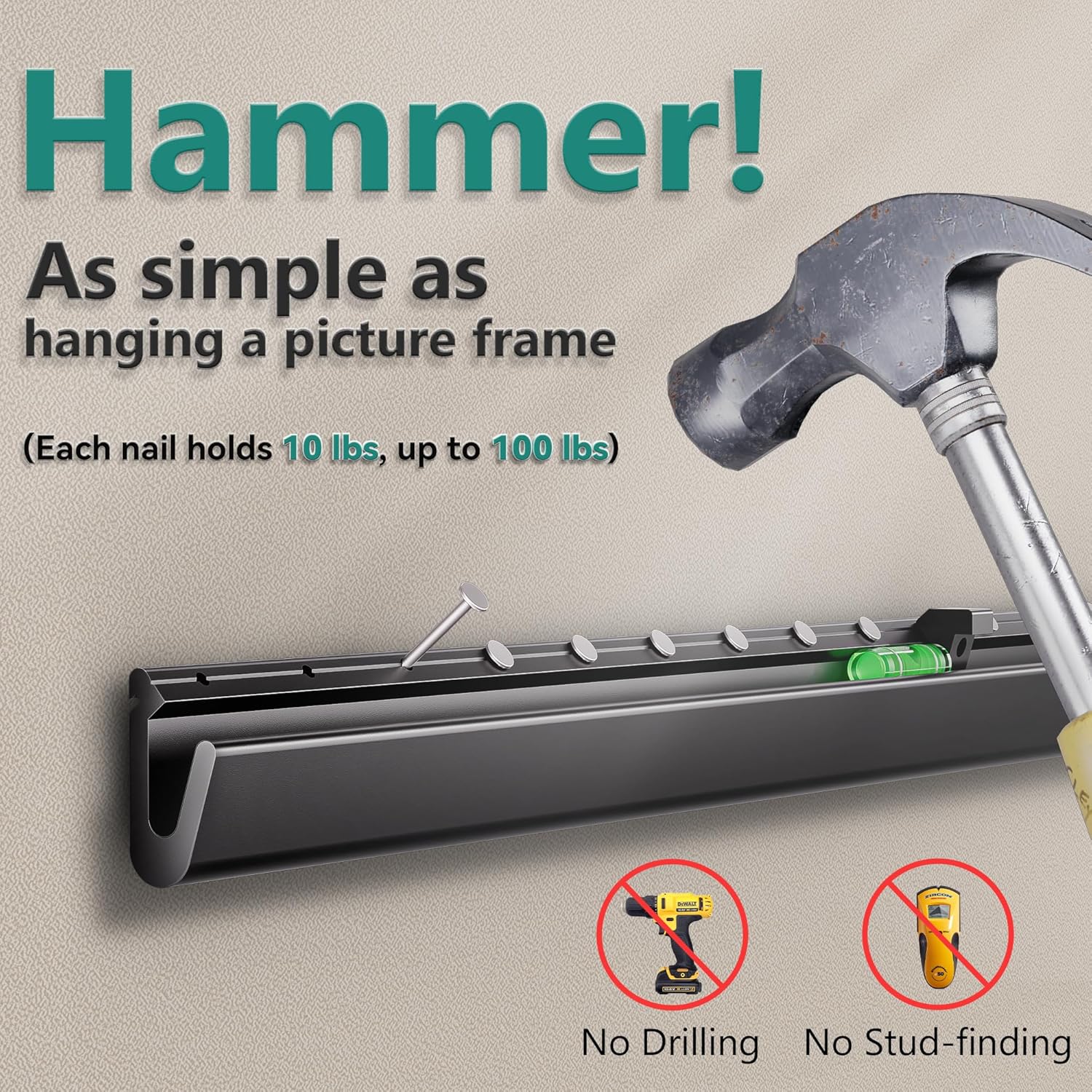
The installation process being compared to hanging a picture gives an impression of low risk and accessibility. For someone unfamiliar with DIY, that could be a big confidence booster. But it also raises a question: can you really secure a 55-inch, 60-pound TV that way long-term, or just because it’s simpler doesn’t mean it’s universally “safe.” If the product relies solely on nails into drywall without any spreading or mechanical locking, the risk is load fatigue or sudden failure—especially if the TV is moved or the wall material isn’t ideal.
There’s also the wall surface issue. Drywall is fine if the bracket is designed to distribute load across a wider area (like those with large adhesive plates or distributed nail points), but older plaster walls might behave differently—more brittle, less grip with small fasteners. Without clarification here, it’s hard to know if the claim covers all common plaster/drywall scenarios or if it’s an optimistic generalization.
Another factor is aesthetics. With a slim profile, low distances, and no visible protruding hardware, the result is certainly cleaner. That suits minimalist rooms or rentals where you might need to finish cleanly when moving out. But it might lack features like built-in cable management, which is common on more versatile higher-end models.
The included five-year warranty is a sign of brand confidence, even if it’s fixed to one component. It’s not the typical two-year standard, which adds some reassurance for buyers worried about longevity.
In use cases, this would be ideal for lightweight setups—guest rooms, dorm setups, temporary arrangements, or on a wall that can’t be damaged. It would feel less suited for a main living room TV or in a high-traffic area unless bolstered by an installer. The lack of tilt or swivel options means the viewing angle can’t be adjusted after mounting, so placement directly facing the seating area is ideal.
If anything, this mount feels like it comes with a conditional benefit: easy DIY and stylish look, but with the trade-off of limited flexibility and potential long-term mounting risks compared to stud-mounted or articulated alternatives. Buyers in safe, stable environments with compatible wall surfaces should find it convenient and functional, but those wanting DIY practicality with peace of mind may want to consider backup options like mounting on a stud if possible, or finding a version with a more fortified mounting system.
It’s worth reaching out to the manufacturer for clarity on exactly how it secures to the wall if there’s concern about weight or safety, but for the demographic this targets—simplicity, compatibility, and minimal hassle—it’s a well-specified, attractive entry into the market.
![Projector 4K with WiFi and Bluetooth [2000 ANSI/AI Auto Focus/Official Licensed Apps], Outdoor Movie Projector with Smart TV OS 2.0 & Dolby, HAPPRUN Home Theater Projector for Indoor/Outdoor Use](https://m.media-amazon.com/images/I/81jhxQB8qNL._AC_SL1500_.jpg "Projector 4K with WiFi and Bluetooth [2000 ANSI/AI Auto Focus/Official Licensed Apps], Outdoor Movie Projector with Smart TV OS 2.0 & Dolby, HAPPRUN Home Theater Projector for Indoor/Outdoor Use")