TCL 65 Inch Class QM6K Series | Mini LED QLED 4K HDR | 65QM6K, 2025 Model | 120HZ-144HZ High Brightness Smart Google TV Dolby Atmos Onkyo Audio | Voice Remote Alexa Gaming Streaming Television




Price: $527.99
(as of Feb 23, 2026 10:20:04 UTC – Details)

The first thing that stands out about this TV is the combination of Mini LED and QLED technologies working together. That pairing isn’t unique in the high-end market, but seeing it positioned in a more affordable segment is what makes this model interesting. The QD-Mini LED approach here promises enhanced brightness, refined contrast, and an expanded color palette without the bloom issues common in older backlighting systems. The Halo Control system looks to address localized dimming bleed, and when paired with the “reduced optical distance” design, it potentially means sharper definition between light and dark areas.
The engineering language in the description points to a layered system: Super High Energy LEDs, condensed micro lenses, and a polarization layer refine light output. To someone who’s sensitive to haloing around bright objects, that particular combination—very small LEDs, high-density zones, and an algorithm fine-tuning processing on the fly—should be reassuring. It’s also not just about moodier blacks; TCL emphasizes consistent quality across room lighting conditions, which is a claim easier to evaluate in person.
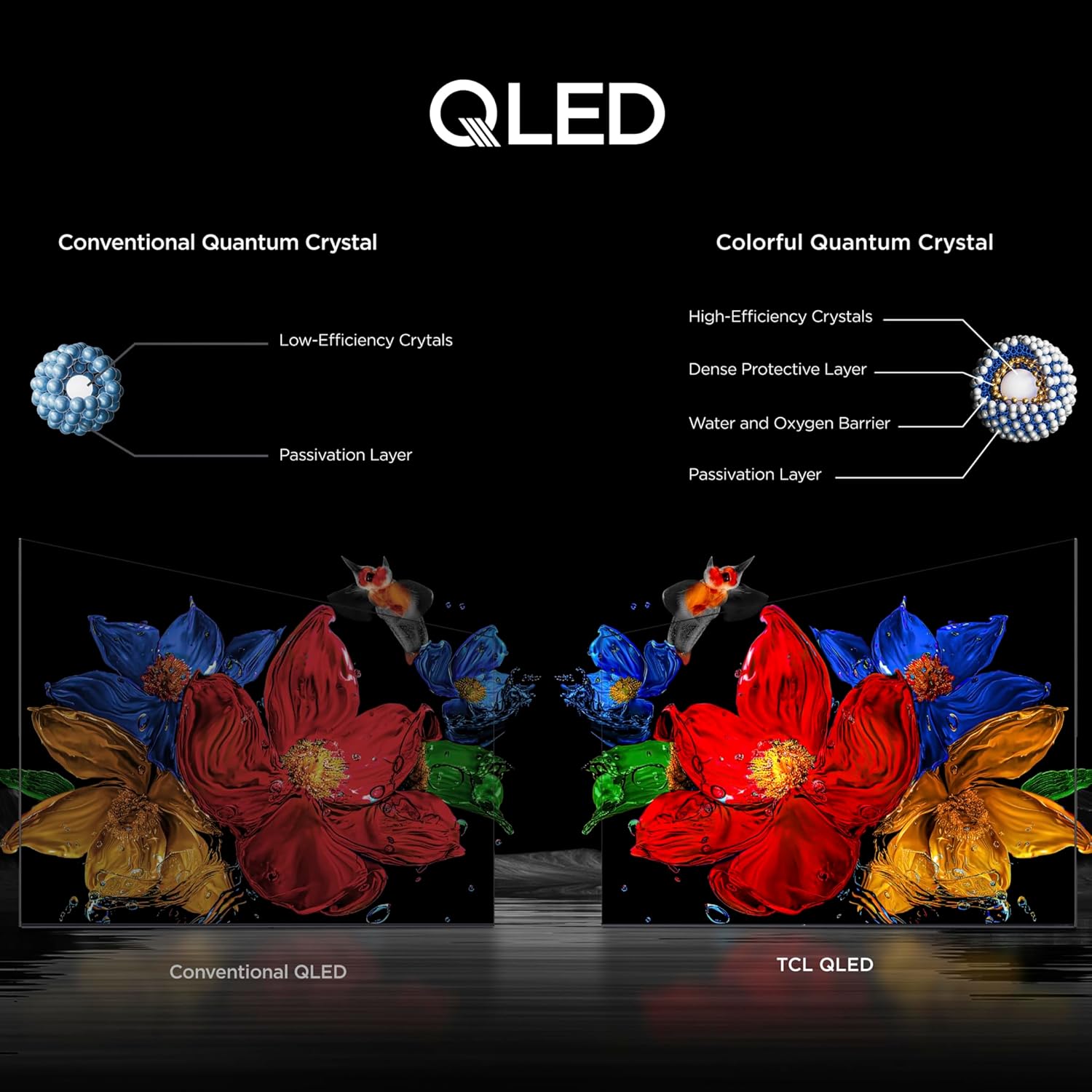
On the color side, Quantum Dot enabled “over a billion colors” isn’t empty marketing if the panel really can deliver HDR10+, HDR10, HLG, and Dolby Vision without format conflicts. This is a significant practical advantage, since mixed-format libraries are the norm. If the AI PQ PRO processor truly learns scene-by-scene, and if the “dynamic light algorithm” adapts in real time, there’s room for both accuracy and drama across content types.
For motion quality, a 144Hz native refresh is rare below premium pricing tiers. Motion Rate 480 uses techniques beyond native refresh, but for gaming or high-speed sports coverage, that native rate alone is a strong selling point. Adding Auto Game Mode with a high refresh rate target—up to 288Hz accelerator capability—places this well for modern PC and console gaming. The low-motion blur qualifies it for fast sports too.
The sound system gathers three technologies into one: Dolby Atmos for spaciousness, DTS Virtual:X for surround expansion, and what seems like a physically larger audio system with an integrated subwoofer from Onkyo. This is not purely virtual audio boosting; the mention of “high performance spatial sound” hints at clearer, more impactful lower frequencies—useful for both immersive shows and games.
The 50-inch model’s slight reduction in gaming refresh may point to manufacturing scaling, but for most living room use cases, the 65-inch variant has the full spec sheet. Platform-wise, including both Google TV and Alexa support covers varied smart home setups. Voice control is embedded in the remote, something that’s become expected rather than special, except in this bracket.
At the price point, the package could be compelling. In a show floor or living room, these statements about bezel-free black detail, lightning-fast response, and sound impact would all need verifying, particularly since “Halo-Free” images are claimed outright. For switching use-cases—movie nights, online gaming, Sunday sports—its technical scaffold seems well-matched to handling different content without sacrificing performance. If the processing lives up to its billing and the Mini LED zones avoid uneven backlighting, it becomes one of the most spec-heavy smart TVs in this range.
This feels like a targeted balance: Premium picture aspirations met with practical build, smart connectivity, and a price that keeps it competitive against higher-line QD-OLED or flagship Mini LED models that cost significantly more.